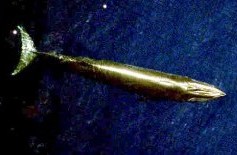
Bryde’s Whales are the least-known and in many ways the most unusual of the rorquals. They are small by rorqual standards—no more than about 25 tonnes—prefer tropical and temperate waters to the polar seas that other whales in their family frequent; are largely coastal rather than pelagic, and although they retain the characteristic plates of whalebone that the baleen whales use to sieve small creatures from the waters with, their diet is composed almost entirely of fish."Bryde" is pronounced /ˈbruːdə/ ("brooda"), and "Bryde's whale" is sometimes misheard as "brutus whale". The Bryde’s whale is named for the Norwegian consul to South Africa, Johan Bryde, who helped set up the first whaling station in Durban, South Africa in 1908.They are distributed widely throughout tropical and subtropical waters, with a separate, smaller, pygmy species found in tropical Western Pacific and South-East Asia.
A blog by Richard, Joe, Stuart, Simon and Lou of Mad Fish Dive Centre at Matava about the great scuba diving around the Fiji Islands. Some of the highlights of living and working in Fiji is the diving on the soft coral reefs with sharks, mantas and teeming life on the reefs.
Monday, 26 October 2009
Bryde’s Whales seen the other day off Solo, north of Kadavu
Thursday, 30 July 2009
Another Whale at Matava
When diving this south side of Fiji's southern most Island, Kadavu, which is known as NewZealandi lailai (the small New Zealand), I look South and think about New Zealand and my home. Today being no exception.
Mona and Steve from California were our only diving guests today, so after our first dive we decided to cruise along the water and have our tea and coffee surface interval on the boat. We sat and relaxed in the sun.
All of a sudden a splash from behind the boat. At first we thought it might be a manta ray. It was moving so fast. Our driver Mas slowed down the boat and as soon as he did we saw it surface. A Whale! Not a Pilot whale like last time, this whale was long and sleek, but it never raised its head above the water, we could only see its crescent shaped dorsal fin. Mas stopped the boat. By this point my mask and fins were on and I explained to Mona and Steve that I was getting in the water and they could join me if they wanted to. I was in.
What a strange looking animal, its nose was pointed and sharp, so different from the pilot whales. He had four huge white spots running parallel with his body from his nose to his dorsal fin. Mona and Steve soon joined me in the water and we snorkeled on the surface as the whale eyed us from below. He swam back and fourth beneath us occasionally surfacing but never taking his dark eyes of us. I was not as frozen or petrified as I was when I saw the pilot whales, we swam on the surface for a long time. At one point I saw him slowly moving towards the surface from the deep, I duck dived down to about 8m to get a better look. He swam right up to me, his head touch my feet and then my belly, I reached out my hands to touch his head as he swam under me. Three long ridges ran from his nose all the way to a twin blow hole which looked to be protected by a splash guard just like on a snorkel. Leathery skin so smooth with huge scars and scratches. He swam slowly under me and before I knew it I was holding his dorsal fin. I could see the huge white spots so closely now, they looked like scars. He continued swimming slowly as I held onto the biggest animal I have ever touched, I counted to ten. I could have held on forever but then I remembered I was holding my breath and it was somewhat important for me to surface.He wiggled his body in the water and I took that as a sign that the ride was over, so I let go. He turned around and swam beneath us again, coming and going. I was absolutely in awe of this animal and could not (can not) believe what just happened. After some time we decided to get back on the boat, but he came back, surfacing and gliding silently beneath us, so we got back in just for one last look at this amazing creature. After seeing the pilot whales I never thought I would get an opportunity like that again but here I am less than four days later with a similar story.
I later found out that the Whale that we saw was a Bryde's Whale (Pronounced Brutus), this Whale is known as Pakake in New Zealand and this type of whale can be traced back to some of the oldest legends in Maori culture.
According to Ngati Porou legend, the legend of my tribe 'Paikea' came to New Zealand from the Pacific Islands on the back of a whale many centuries ago. I bet he had an awesome trip.
Tuesday, 30 June 2009
Whales at Matava
An afternoon dive to finish the day. Richard, Myself, Zee Germans (Nadine and Dja) and Nichole. We went out the closest passage, Korolevu, took a right and there they were. Nadine spotted the dorsal fins on the surface, they looked just like dolphins but then we saw them surface, huge square heads, Pilot Whales. I counted twelve on the surface at one time.
We approached them ever so slowly and Drex our driver stopped the engine. We were in, without a second thought we were in. Now some people may think that this was not a very smart thing to do but we were in the water before you could have said ‘watch out for the sharks’. A once in a life time opportunity that was taken by all on board.
The Pilot Whales were about 12 – 15m away from the boat, four of them. The biggest one opened its mouth showing hundreds of sharp crocodile looking teeth and he crunched down on a Spanish mackerel so hard that the fish split clean in two, this is the honest truth. The big whale took one half of the fish and passed it so gently to the smaller one. Wow, it was amazing! Truly amazing!
We saw it again four whales feeding and sharing and then the smallest one turned and came straight towards the boat. There were four divers in the water, just with mask and snorkels, we were holding on to the side of the boat and the smallest whale was swimming right at us. If I was not so frozen by amazement I would have reached out and touched him. He swam so close then turned onto his belly and swam right under us, looking at us with his big eye. He swam so close that I could see myself in his eye, I remember seeing my mouth wide open in astonishment in the reflection.
Then came the shark, 3.5 – 4m Silver tip! This is the first time I have truly thought I was going to die. Dja said he saw the shark earlier and he didn’t really want to get back in the water, I made fun of him and told him he was exaggerating and no way could the shark be 3m long. And for the second time today boy was I wrong! (Sorry Dja) Previously before jumping back into the water (after hearing Dja’s exaggerated Shark story that turned out not to be an exaggeration at all) I said to Drex, our driver, that if there is a shark in the water I wanted him to promise me that he would pull me out first, I was only really joking, but I still made him promise.
This silver tip came from the deep I could see it eating scraps left by the whales, it came charging towards the boat. At first I thought it was a whale, but as it came closer I saw it had an angry face not like the happy whale face. Everyone screamed shark and furiously started kicking ourselves onto the boat. Everyone except for Richard who calmly remained in the water before slowly getting back onto the boat. Drex was laughing at everyone because he thought we were joking but then I think he saw the pure terror in everyone’s face, and I must remember to thank him because as soon as he realised we were serious he pulled me out of the water so fast I almost flew right back in over the opposite side of the boat. It was the first time Drex had seen whales that close, it was the first time any of us had seen whales that close. Even the shark came to the surface and was trying to feed with the whales – Wow! I wish I could do this experience justice with words – but – but I just can’t.
It was like seeing a mythical creature, an old creature, an animal that has traveled so far, so deep, seen so much, speaks an ancient secret language, so elegant, so beautiful and so amazingly powerful. We were allowed a small glimpse of this magic. A secret look at one of earths most majestic creatures.
Today I saw everyone I love, everyone who is here and gone, I saw life and death and I saw it all in the eye of a whale.
Thursday, 4 September 2008
Japan kills 551 Antarctic whales, short of target
TOKYO (Reuters) - Japan's Antarctic whaling catch fell far short of its target this season, hampered by a series of skirmishes with anti-whaling protesters, the Fisheries Agency said on Monday.
The fleet caught only 551 minke whales, compared with the planned catch of 850. No fin whales were caught at all, although it had set a target of 50, a Fisheries Ministry official said.
"Sabotage by activists is a major factor behind our failure to achieve our target," the official said.
Militant anti-whaling campaigners from the Sea Shepherd Conservation Society had repeatedly confronted Japan's whaling fleet earlier this year.
Last month, members of the Sea Shepherd group threw bottles and containers of foul-smelling substances at a whaling ship in an attempt to disrupt the hunt, resulting in three sailors complaining of eye irritation.
The incident followed a high-profile standoff in January in which two activists boarded another Japanese whaling ship, forcing it to suspend whaling for a month.
The absence of fin whales in the catch was partly due to other factors, the ministry said.
"Sabotage is not entirely to blame for that. There was a situation where few fin whales were spotted," the official said.
Greenpeace Japan, which also carried out activities aimed at obstructing the hunt, said it was not satisfied with the reduced catch.
"They say that one reason for the lower catch is that they didn't see so many whales," said Junichi Sato of Greenpeace. "That is a good reason why they should not conduct lethal research."
He added that, despite the reduction, the number of whales actually killed was more than three years ago.
International criticism forced Japan to give up a plan to catch 50 humpback whales, a favorite with whale watchers.
The clashes sparked a spate of diplomatic complaints between Japan and Australia.
The Australian government has promised to try to stop Japan's whaling program and is considering international legal action, although the two countries have agreed not to let the issue hurt ties.
Japan's coastguard and police will inspect the country's whaling fleet this week after the clashes with the conservation activists, local media reported on Sunday.
The six-ship fleet is expected to return home on Tuesday.
Japan, which considers whaling a cultural tradition, abandoned commercial whaling after agreeing to an international whaling moratorium in 1986. But arguing that the hunt is necessary to study whales, Japan began what it calls a scientific research whaling program the following year.
Japan's whaling fleet has killed about 7,000 Antarctic minkes over the past 20 years.
(Reporting by Teruaki Ueno and Isabel Reynolds; Editing by Alex Richardson)
Saturday, 1 December 2007
Information and support of the cause to end whaling
- Greenpeace
- Boycott Japan
- International Fund For Animal Welfare
- Sea Shepherd
- World Wildlife Fund
- Natural Resources Defence Council
- Save the Whales
- Whale Nation
Many of the sites listed above also have anti-whaling petitions and projects to support and protect whales.
I urge you to help these organisations with all their endeavours. While we may not directly agree with the tactics used by some groups we understand and respect the resolve they show in the campign to save the whales. One thing we all have in common is a love of these amazing marine mammals.
Tuesday, 19 June 2007
We Love Japan, But Whaling Breaks Our Hearts
On Valentine's Day, Greenpeace protests during the second day of the "International Whaling Commission Normalisation Meeting." The meeting was called by Japan and supported by pro-whaling nations. Outside the venue, Greenpeace Japan tries to present Valentine's Day whale-shaped chocolates to the pro-whaling delegates attending the meeting.
In Tokyo, Greenpeace volunteers carried a giant Valentine’s card, addressed to pro-whaling members of the International Whaling Commission (IWC), currently meeting to discuss "normalising" the Commission, which read: "Normalization Means Protection, Not Whaling"
A fax was also sent to the Nisshin Maru – the factory ship of the whaling fleet, which read:
“We Love Japan, but Whaling Breaks Our Hearts! 69 % of your fellow Japanese do not support what you are doing in the Sanctuary and there is virtually no market for what you are producing. The "research" you have been ordered to carry out is not wanted by scientists and the meat is not wanted by the Japanese people. On this Valentine's Day, a day for spreading love, we ask once again that you leave the Southern Ocean Whale Sanctuary and return to port.”
Elsewhere, flowers, hearts, chocolates, kisses and romantic gondola trips were delivered by Greenpeace activists to embassies and tourists in Argentina, Australia, Denmark, Chile, Costa Rica, Ecuador, France, Germany, Fiji, Greece, Guatemala, Ireland, Italy, Mexico, the Netherlands, New Zealand, Norway, the Philippines, Poland, Paraguay, Portugal, Russia, Sweden, Spain, Thailand, Uruguay and the USA.
The Greenpeace ship Esperanza is in the Southern Ocean, tracking the whaling fleet. The expedition is the last leg of the Defending Our Oceans campaign (1), to expose all threats to the oceans, which began in November 2005 by sailing to the Southern Ocean, where activists prevented 82 whales from being killed, and also forced out the companies funding the hunt, by taking peaceful direct action.
Wednesday, 30 May 2007
Whales & Dolphins (Smithsonian Handbooks)
From the great illustrations and quick-reference title bar that includes taxonomic, habitat and population information, to the range maps and behavioral information, this book was such a steal. I received this book shortly before starting cetacean surveys in the south pacific and it was an incredible source of information. I have used many field guides and, although I never tested its 'water-proofness", it is simultaneously concise yet complete. It not only gives identification keys for individual species, but also keys to identifying individual animals. If you are a teacher, student, biologist or enthusiast, get it, wherever you are in the world.
Sunday, 25 March 2007
Blow to Whale Conservation
Take a look at the Greenpeace whale tourism pledge – http://oceans.greenpeace.org/en/stop-icelandic-whaling .
With the signatures already signed to this pledge, Greenpeace have calculated that the revenue to
What do you think? If you feel that
Thursday, 1 March 2007
Lawsuit Filed to Protect World's Most Endangered Whale
The Center for Biological Diversity has filed a lawsuit to compel the Bush administration to protect the North Pacific Right Whale under the federal Endangered Species Act. The US Department of the Interior has proposed opening up areas in the Bering Sea frequented by the species to offshore oil development. Additionally, President Bush is considering lifting the presidential withdrawal that currently prohibits such development.
The North Pacific Right Whale (Eubalaena japonica), once ranging from Baja California to Alaska, is the most endangered large whale in the world, with perhaps as few as 100 individuals remaining. Devastated by commercial whaling, North Pacific Right Whales now face the threat of oil and gas development in their critical habitat.
Read more...
Friday, 16 February 2007
Sea Creatures to Be Tracked Electronically
In a modern update of "fish and chips," researchers are planning a worldwide effort to track the movement of sea creatures tagged with tiny electronic devices.
Following pilot testing in the north Pacific, the Ocean Tracking Network will expand to the Atlantic, Arctic, Mediterranean and Gulf of Mexico.
Details of the expansion were scheduled to be announced Monday at Dalhousie University in Halifax, Nova Scotia, Canada.
Sea life ranging from salmon to whales, turtles to sharks, will be tagged so they can then be tracked as they swim past arrays of sensors placed at critical locations in the oceans.
Read more at Environmental News Network
Thursday, 15 February 2007
We Love Japan, But Whaling Breaks Our Hearts
On Valentine's Day, Greenpeace protests during the second day of the "International Whaling Commission Normalisation Meeting." The meeting was called by Japan and supported by pro-whaling nations. Outside the venue, Greenpeace Japan tries to present Valentine's Day whale-shaped chocolates to the pro-whaling delegates attending the meeting.
In Tokyo, Greenpeace volunteers carried a giant Valentine’s card, addressed to pro-whaling members of the International Whaling Commission (IWC), currently meeting to discuss "normalising" the Commission, which read: "Normalization Means Protection, Not Whaling"
A fax was also sent to the Nisshin Maru – the factory ship of the whaling fleet, which read:
“We Love Japan, but Whaling Breaks Our Hearts! 69 % of your fellow Japanese do not support what you are doing in the Sanctuary and there is virtually no market for what you are producing. The "research" you have been ordered to carry out is not wanted by scientists and the meat is not wanted by the Japanese people. On this Valentine's Day, a day for spreading love, we ask once again that you leave the Southern Ocean Whale Sanctuary and return to port.”
Elsewhere, flowers, hearts, chocolates, kisses and romantic gondola trips were delivered by Greenpeace activists to embassies and tourists in Argentina, Australia, Denmark, Chile, Costa Rica, Ecuador, France, Germany, Fiji, Greece, Guatemala, Ireland, Italy, Mexico, the Netherlands, New Zealand, Norway, the Philippines, Poland, Paraguay, Portugal, Russia, Sweden, Spain, Thailand, Uruguay and the USA.
The Greenpeace ship Esperanza is in the Southern Ocean, tracking the whaling fleet. The expedition is the last leg of the Defending Our Oceans campaign (1), to expose all threats to the oceans, which began in November 2005 by sailing to the Southern Ocean, where activists prevented 82 whales from being killed, and also forced out the companies funding the hunt, by taking peaceful direct action.