Eagle Rock is one of the very best dive sites that the Great Astrolabe Reef as to offer any keen diver. With its amazing rock formations, hard corals and great selection of fish life.
Getting to the site can be a task on its own with surface swells telling you weather or not it is to strong to take on, so timing is the key, but once you get to the eagle rock site you will initially experience eagle rays past by and see very few hard corals that give in to the currents here.
Then once fully into the channel you will find yourself been given access to an underwater paradise, with so much in site you first won’t know where to look. As you will be passing over the rough rock bed with grey reef shark flying past you will start looking in amazement.
With the truly amazing colours of hard corals and great selection of life that it as on offer here, there is something for every diver. Whether it be the green lettuce corals, pale grey corals, lime corals or violet finger corals, this great diving site as something new for everything individual to discover.
This is a site that will keep the attention of any diver that can get bored quick because of its truly amazing variety on offer.
Diving Season
This is an all year round water sport on the Kadavu Island. However the months of November to April will see the most rainfall, but is also the most tropical months when temperatures can reach as high as 32C. It is the most coolest months between July to October when the waters will be generally a bit more cooler.
Scuba Diving Eagle Rock In Kadavu

Showing posts with label scuba diving. Show all posts
Showing posts with label scuba diving. Show all posts
Tuesday, 17 March 2009


Sunday, 21 December 2008
Fiji Is The Soft Coral Capital of the World
Fiji Is The Soft Coral Capital of the World
"Another popular diving site in Fiji is Astrolabe Reef which is situated in the southern area. There you can find a beautiful variety of coral and reef but the dive sites are small and are accessible by boat. The weather is sometimes humid there, but you will not have big problems with scuba diving because of that."
Fiji Is The Soft Coral Capital of the World
"Another popular diving site in Fiji is Astrolabe Reef which is situated in the southern area. There you can find a beautiful variety of coral and reef but the dive sites are small and are accessible by boat. The weather is sometimes humid there, but you will not have big problems with scuba diving because of that."
Fiji Is The Soft Coral Capital of the World
Thursday, 11 December 2008
The Best SCUBA Diving Destinations: Dive Sites around the World
Astrolabe reef, Fiji
"Where to start? Pristine reef, super visibilty, turtles, rays, shark etc...and best of all not another boat in sight!"
Paul Coysh, UK, 2007
The Best SCUBA Diving Destinations: Dive Sites around the World
Eco dilemma: Is it OK to scuba dive? | Travel | The Guardian
This winter, thousands of British travellers will visit coral reefs all over the world, from the Red Sea to Indonesia and the Great Barrier Reef. Yet the world's coral reefs - the "rainforests of the sea" - are under imminent threat. According to the World Wildlife Fund, 27 have been destroyed and, if present trends continue, 60% will be lost in the next 30 years.
While the most significant threat to coral comes from pollution, over-fishing and climate change, bad scuba diving practices can cause significant damage to these fragile ecosystems. The key to all good diving is buoyancy control - the more in control you are the less likely your fins, hands, knees and scuba equipment will bump against the coral and damage it. On average, it takes 25 years for coral to recover from a diver's single clumsy brush against it. Too many divers at a site can also cause disturbance to fish and the coral, so check that your dive operator avoids the busiest dive sites. Responsible dive operators should also have a policy of anchoring only to permanent buoys (attached by concrete to the sea floor) rather than dropping anchors on or near reefs.
PADI (padi.com) runs a course on protecting the marine environment and a Peak Performance Buoyancy course, which both count as "speciality" courses required for the Master Scuba Diver certification. It also runs Project Aware (projectaware.org), which organises underwater conservation activities.
And you can put your dive holiday to good use by contributing your underwater observations to the Global Dive Log (earthdive.com).
· To ask a question or offer advice, go to greentraveller.co.uk.
Eco dilemma: Is it OK to scuba dive? | Travel | The Guardian
While the most significant threat to coral comes from pollution, over-fishing and climate change, bad scuba diving practices can cause significant damage to these fragile ecosystems. The key to all good diving is buoyancy control - the more in control you are the less likely your fins, hands, knees and scuba equipment will bump against the coral and damage it. On average, it takes 25 years for coral to recover from a diver's single clumsy brush against it. Too many divers at a site can also cause disturbance to fish and the coral, so check that your dive operator avoids the busiest dive sites. Responsible dive operators should also have a policy of anchoring only to permanent buoys (attached by concrete to the sea floor) rather than dropping anchors on or near reefs.
PADI (padi.com) runs a course on protecting the marine environment and a Peak Performance Buoyancy course, which both count as "speciality" courses required for the Master Scuba Diver certification. It also runs Project Aware (projectaware.org), which organises underwater conservation activities.
And you can put your dive holiday to good use by contributing your underwater observations to the Global Dive Log (earthdive.com).
· To ask a question or offer advice, go to greentraveller.co.uk.
Eco dilemma: Is it OK to scuba dive? | Travel | The Guardian
Wednesday, 2 July 2008
Matava Featured in M2 Magazine


Saturday, 2 February 2008
Ayoumi and Taki
Domo arigato to Ayoumi and Taki for being such fun on their recent trip to Matava.
Here on their honeymoon, the fearless couple decided to try out scuba diving with a PADI Discover Scuba Diving experience. It was a big enough challenge just to get the wetsuits on, after a bad case of sun burn from the previous day, along with Ayoumi’s 3 inch fingernails which had been specially done for the wedding. But after only 2 hrs we were suited up and ready to go.
Having only snorkelled for the first time ever on this trip, it was pretty brave of them to be scuba diving. After the initial panic’s were over, they were looking more comfortable and they were both clearing regulators and masks like professionals - so we headed down to 12m to check out the fish. Ayoumi didn’t let go of my hand for the entire dive and Taki looked like he was flying.
After we surfaced I asked them if they enjoyed it. I will remember their responses forever. Ayoumi just said, “I need to pee!” – But after a quick visit to the toilet, she told me she loved it. Taki’s answer might be the best I’ve ever heard.
Couldn’t put it better myself.
Here on their honeymoon, the fearless couple decided to try out scuba diving with a PADI Discover Scuba Diving experience. It was a big enough challenge just to get the wetsuits on, after a bad case of sun burn from the previous day, along with Ayoumi’s 3 inch fingernails which had been specially done for the wedding. But after only 2 hrs we were suited up and ready to go.
Having only snorkelled for the first time ever on this trip, it was pretty brave of them to be scuba diving. After the initial panic’s were over, they were looking more comfortable and they were both clearing regulators and masks like professionals - so we headed down to 12m to check out the fish. Ayoumi didn’t let go of my hand for the entire dive and Taki looked like he was flying.
After we surfaced I asked them if they enjoyed it. I will remember their responses forever. Ayoumi just said, “I need to pee!” – But after a quick visit to the toilet, she told me she loved it. Taki’s answer might be the best I’ve ever heard.
“It was like being in a dream!”
Couldn’t put it better myself.
Monday, 10 September 2007
Dive Light Basics - Before You Buy a Dive Light
Dive Light Basics - Before You Buy a Dive Light 
Cool article and excellent pointers on buying a dive light. I almost wrote something almost identical, but searched first to find this on About.com.
Stuart
==================================================
Dive Light Basics - Before You Buy a Dive Light
Which dive light is the right one? Choosing a dive light isn't easy, and the dozens of products available make it even harder. Normally, dive lights are used for night diving but can be taken down during the day, too. When shopping for a light, seek the help of a seasoned professional at your dive center. Here are some things to consider.
Read the whole article at Dive Light Basics - Before You Buy a Dive Light
Cool article and excellent pointers on buying a dive light. I almost wrote something almost identical, but searched first to find this on About.com.
Stuart
==================================================
Dive Light Basics - Before You Buy a Dive Light
Which dive light is the right one? Choosing a dive light isn't easy, and the dozens of products available make it even harder. Normally, dive lights are used for night diving but can be taken down during the day, too. When shopping for a light, seek the help of a seasoned professional at your dive center. Here are some things to consider.
Read the whole article at Dive Light Basics - Before You Buy a Dive Light
 |
Saturday, 14 July 2007
DAN Incident Report Now Available FREE to All Divers
Important industry report now made available to divers around the world as a public service by DAN.
A 34-year-old male freediver was attacked by a shark while spearfishing in Hawaii. He received a nonfatal bite to the shoulder while swimming back to shore towing a bag of fish. He was able to stand and strike the 12-foot (4-meter) shark with his speargun as it returned. He was assisted from the water by local residents. – From the 2006 DAN Annual Diving Report
Know someone who’s had a similar close call? Interested in reading about more incidents? Are you convinced that you can learn a great deal by reading about divers’ missteps?
The DAN Diving Report, compiled and published annually by DAN Research, is now available to the public at no cost: Simply go to the DAN website and download it. Formerly available free to DAN Members only, the report is now posted where dive professionals, researchers, journalists and all scuba divers can view it with just a few clicks.
You can now view DAN accident and fatality reports from 2001 to 2006. The Diving Report for 2007 is in progress, slated for release later this year.
The latest issue, The Annual Diving Report: 2006 Edition, presents information on Project Dive Exploration, scuba diving injuries and fatalities, based on data collections during 2004. Beginning with the 2005 report, DAN has added sections on breath-hold diving, including summary data and thumbnail case reports.
Want More Info? The entire report is available free of charge.
To download it, go to: http://diversalertnetwork.org/medical/report/index.asp
Know someone who’s had a similar close call? Interested in reading about more incidents? Are you convinced that you can learn a great deal by reading about divers’ missteps?
The DAN Diving Report, compiled and published annually by DAN Research, is now available to the public at no cost: Simply go to the DAN website and download it. Formerly available free to DAN Members only, the report is now posted where dive professionals, researchers, journalists and all scuba divers can view it with just a few clicks.
You can now view DAN accident and fatality reports from 2001 to 2006. The Diving Report for 2007 is in progress, slated for release later this year.
The latest issue, The Annual Diving Report: 2006 Edition, presents information on Project Dive Exploration, scuba diving injuries and fatalities, based on data collections during 2004. Beginning with the 2005 report, DAN has added sections on breath-hold diving, including summary data and thumbnail case reports.
Want More Info? The entire report is available free of charge.
To download it, go to: http://diversalertnetwork.org/medical/report/index.asp
Thursday, 7 June 2007
Shadow Divers: The True Adventure of Two Americans Who Risked Everything to Solve One of the Last Mysteries of World War II
This is one of those rare books that you know within the first dozen pages it's going to be a great read and you're going to be disappointed when it ends. Robert Kurson's tremendous research combined with a great historical narrative style results in learning not only about the lives of the living players such as Chatterton and Kohler, but the dead sailors on the submarine as well.
While this is Kurson's book, you can see the extensive contribution provided by Chatterton, Kohler and others who shared the experience. This book fits beautifully with "The Last Dive", which I reviewed here a few years ago. I did learn things here, which surprised me relative to "The Last Dive". I thought they had been doing mixed-gas diving much longer on U-869 then just before the Rouse's arrival. Chapter 2 is about the dangers of wreck diving and sets the stage of what to expect throughout the remainder of the book.
Kurson makes sure the reader understands this wasn't just a bunch of treasure hunters looking for some "stuff". These guys respected this dive site as sacred resting place for these German sailors and their actions (including their own research) supported that belief. And in the end, I was right...it was a disappointment to see it end.
While this is Kurson's book, you can see the extensive contribution provided by Chatterton, Kohler and others who shared the experience. This book fits beautifully with "The Last Dive", which I reviewed here a few years ago. I did learn things here, which surprised me relative to "The Last Dive". I thought they had been doing mixed-gas diving much longer on U-869 then just before the Rouse's arrival. Chapter 2 is about the dangers of wreck diving and sets the stage of what to expect throughout the remainder of the book.
Kurson makes sure the reader understands this wasn't just a bunch of treasure hunters looking for some "stuff". These guys respected this dive site as sacred resting place for these German sailors and their actions (including their own research) supported that belief. And in the end, I was right...it was a disappointment to see it end.
Wednesday, 6 June 2007
Shadow Divers: The True Adventure of Two Americans Who Risked Everything to Solve One of the Last Mysteries of World War II
This is one of those rare books that you know within the first dozen pages it's going to be a great read and you're going to be disappointed when it ends. Robert Kurson's tremendous research combined with a great historical narrative style results in learning not only about the lives of the living players such as Chatterton and Kohler, but the dead sailors on the submarine as well.
While this is Kurson's book, you can see the extensive contribution provided by Chatterton, Kohler and others who shared the experience. This book fits beautifully with "The Last Dive", which I reviewed here a few years ago. I did learn things here, which surprised me relative to "The Last Dive". I thought they had been doing mixed-gas diving much longer on U-869 then just before the Rouse's arrival. Chapter 2 is about the dangers of wreck diving and sets the stage of what to expect throughout the remainder of the book.
Kurson makes sure the reader understands this wasn't just a bunch of treasure hunters looking for some "stuff". These guys respected this dive site as sacred resting place for these German sailors and their actions (including their own research) supported that belief. And in the end, I was right...it was a disappointment to see it end.
While this is Kurson's book, you can see the extensive contribution provided by Chatterton, Kohler and others who shared the experience. This book fits beautifully with "The Last Dive", which I reviewed here a few years ago. I did learn things here, which surprised me relative to "The Last Dive". I thought they had been doing mixed-gas diving much longer on U-869 then just before the Rouse's arrival. Chapter 2 is about the dangers of wreck diving and sets the stage of what to expect throughout the remainder of the book.
Kurson makes sure the reader understands this wasn't just a bunch of treasure hunters looking for some "stuff". These guys respected this dive site as sacred resting place for these German sailors and their actions (including their own research) supported that belief. And in the end, I was right...it was a disappointment to see it end.
Friday, 25 May 2007
Final Thoughts: A discussion on diving and air consumption

I have discussed 13 aspects of our sport where I believe you can make a difference in your air consumption. Some may only yield tiny results, some larger or none at all. I am convinced however that if you are concerned about high air usage and address all of these areas you will see a continued and significant improvement.
I hope that divers reading this will have their own views and other suggestions that I have missed – it would be great to hear your comments.
This is where we come full circle in the discussion on improving your air consumption underwater. Diving is like many sports, the more you do, the better you get at it and the easier it all becomes.
As things become second nature you can relax your body and mind allowing you to take full advantage of the air that you take underwater with you in your tank.
Monday, 21 May 2007
Matava is an eco adventure getaway
Matava is an eco adventure getaway offering you a fun and unique blend of cultural experiences and adventure activities in the environmentally pristine and remote island of Kadavu in Fiji.
Experience the true underwater beauty of Fiji with Matava Resort. You’ll benefit from our exclusivity because you’ll hardly ever see another diveboat! You’ll also be able to explore all of the diverse passages and outer reef sites the Great Astrolabe Reef has to offer. The hard corals are stunning, the fish diversity is enormous and encounters with pelagics and sharks are the norm rather than the exception. Of course, The Manta Dive is a must! Dive with us and our PADI dive professionals will ensure you have a fun and an unforgettable diving holiday.
Experience the true underwater beauty of Fiji with Matava Resort. You’ll benefit from our exclusivity because you’ll hardly ever see another diveboat! You’ll also be able to explore all of the diverse passages and outer reef sites the Great Astrolabe Reef has to offer. The hard corals are stunning, the fish diversity is enormous and encounters with pelagics and sharks are the norm rather than the exception. Of course, The Manta Dive is a must! Dive with us and our PADI dive professionals will ensure you have a fun and an unforgettable diving holiday.
Tuesday, 15 May 2007
Part 11: A discussion on diving and air consumption: Photography
‘Well what about it?’ I hear you ask.
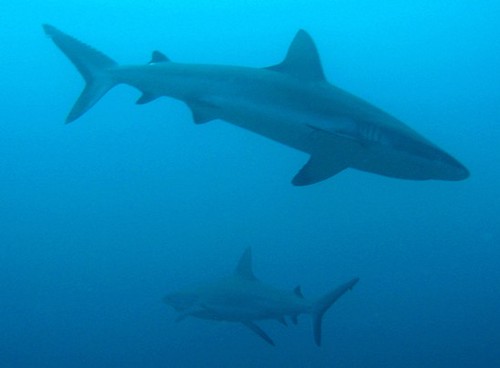
And my answer may be unpopular with a lot of people. In my opinion most divers take cameras into the water before they have sufficiently honed their diving skills. Destruction of the reefs aside (as out of control diver/photographers crash into it) this is a discussion on air consumption.
A camera is another piece of gear to cope with. It causes drag, is a distraction and can task load someone who still has skills such as buoyancy to master. All of these factors will cause an increase in air consumption.
With the revolution in digital cameras and housings, underwater photography is within reach of many divers and of course it is great fun. If you are concerned about your air consumption and dive with a camera, do an experiment. Leave the camera on the boat for 1 dive and see if it makes a significant difference. If so (and I believe even the most experienced photographers use more air when taking photos than diving without a camera) you have a simple decision to make – enjoy the fun of photography or enjoy extra dive time.
In time you will be able to do both but maybe leave the camera behind sometimes so you can hone your diving skills.
Of course that’s going to be the dive when you bump into a school of hammerheads, 20 mantas………..
Saturday, 5 May 2007
Part 13: A discussion on diving and air consumption: Breathing techniques

Note how far down the list I have put breathing techniques and this is the one people feel holds the magic answer. I firmly believe that if you address all the previously discussed headings, relax and get the basics right, you will see an improvement in your air consumption.
Again, yoga teaches breathing techniques as part of relaxation and there are some things you can try underwater. It is widely accepted that in diving, breathing should be slow and deliberate (as in yoga) using the full normal range of the lungs. I and others have found that reversing your normal pattern of breathing can really help you use air more efficiently hence conserving it.
At rest, your normal breathing pattern will be; breathe in, breath straight out, pause with empty lungs for second or 2 and then repeat.
Try reversing this by breathing in slowly, pausing at the top of the breath, breathing out slowly then immediately in slowly again with no pause at the bottom of the breath. I find I adopt this pattern automatically when diving – try it and see if it works for you.
Friday, 27 April 2007
Part 12: A discussion on diving and air consumption: Physical Fitness
It would seem to make intuitive sense that good cardiovascular fitness would lead to better air consumption. It is however a difficult one to prove as there are so many variables at play. I can’t find any strong studies on this subject and think that it would be fascinating to conduct one.
On one hand you have fitter people being able to make better use of air relating to exercise but on another you have increased muscle ratio and higher metabolism burning more calories at rest.
Yoga has certainly shown many benefits in diving; it helps stress management, improves mental alertness, teaches you how to relax, improved use of senses, increases flexibility and concentration on breathing techniques.
Overall it would seem to make sense that as in any sport, a diver should maintain some degree of physical fitness.
Thursday, 19 April 2007
Part 10: A discussion on diving and air consumption: Pace / kick style / movement
Divers often show their personalities in the way they dive – there are those who are very busy buzzing about the reef and those who are laid back and going with the flow.
Guess who normally lucks out on air consumption? During training, I often get my students to see if they can increase their dive speed by just 50%. Sounds easy however the effort required leaves them and me gasping for breath after about 30 seconds. That particular dive doesn’t tend to last very long!

Obviously all movement cannot be cut out on a dive else you would never go anywhere. It is very important therefore that movements should be as energy efficient as possible. Because of the density of water, slow steady movements are most efficient – there is no use fighting water, it will win every time and rob you of your air to boot.
Pace your dive and try to develop an efficient fin kick which allows you to kick and glide, kick and gliiide, kick and gliiiiiiiide – you get the idea.
Tuesday, 17 April 2007
Part 9: A discussion on diving and air consumption: Arm movement

If you’ve ever done an aerobics class, there’s a reason the instructor makes you do all those arm movements until you feel that they are going to drop off. It’s exactly the same reasoning that made your diving instructor want to tie you arms to your side during your first dive course.
The introduction of upper body movement can increase your metabolism by up to 30%. Great if you want to burn calories in an aerobics class, disastrous for air consumption on a dive – enough said!
Sunday, 15 April 2007
Part 8: A discussion on diving and air consumption: Trim

If you get yourself neutrally buoyant but find that you fall forwards, backwards or to one side or another then your trim needs adjusting (imagine everyone on a small plane suddenly standing up and all moving to one side!).
You can correct yourself in the water, (using movement, energy and therefore more air) as many times as you wish however you will always fall back unless you correct the cause.
The solution is normally as simple as shifting a weight slightly. It won’t fix itself - don’t put up with it!
Diving with Diabetes – an update

Following on from my previous blog item posted in February, the Undersea and Hyperbaric Medicine Society (UHMS) and the Divers Alert Network (DAN) have published consensus guidelines resulting from their 2005 co-sponsored workshop, ‘Diabetes and Recreational Diving: Guidelines for the future.
What was historically considered an absolute contraindication to diving is now being openly supported for those who are medically evaluated and who carefully monitor their condition and meet certain criteria. The view held by the medical community on people who have insulin-dependent diabetes was relaxed and those using dietary control for their diabetes should easily be able to meet the guidelines.
Note that the report has issued guidelines and not rules and should only be used as toll for the physician when evaluating a person with diabetes for diving.
The full ‘Diabetes and Recreational Diving: Guidelines for the Future’ can be ordered by contacting DAN Americaswww.diversalertnetwork.org
Tuesday, 10 April 2007
Part 7: A discussion on diving and air consumption: Buoyancy
Mastering your buoyancy is a key skill relevant to all aspects of your diving. If you have complete buoyancy control you can eliminate extraneous movements underwater.
As water is so dense, all movements use much more energy than the same movement on land and hence use more air. Correct buoyancy also allows you to perfect the fin kick of your choice to propel you most efficiently through the water.
There are many fun exercises you can do to hone your buoyancy but something you should do all the time on every dive is use fixed visual references to give you a continual picture of where you are relative to everything else.
If you catch buoyancy lapses quickly, you spend less energy correcting them thus conserving more air.
Subscribe to:
Posts (Atom)